-
3,888 metres
-
Best Hotel and Tents
-
Summer Months
-
Spritual
-
Brekfast, Dinnear (Vegetarian)
-
English, Hindi
The Amarnath Yatra is one of the most revered pilgrimages for devotees of Lord Shiva. Deep in the mountains of Jammu and Kashmir, at an altitude of around 3,888 metres, lies the sacred Amarnath Cave, where a naturally formed ice lingam is worshipped as a manifestation of Lord Shiva.
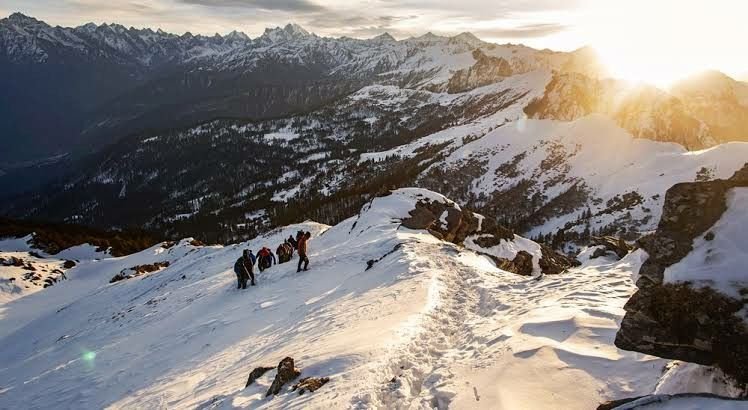
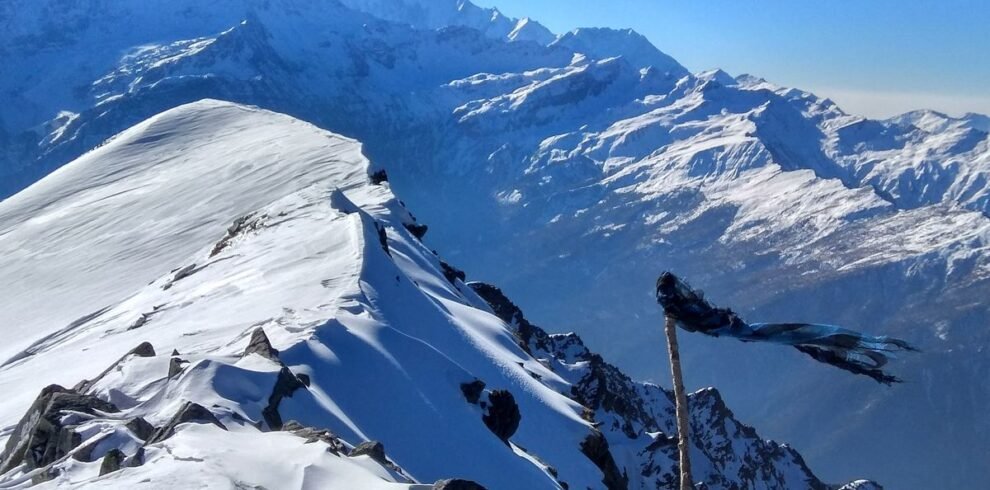
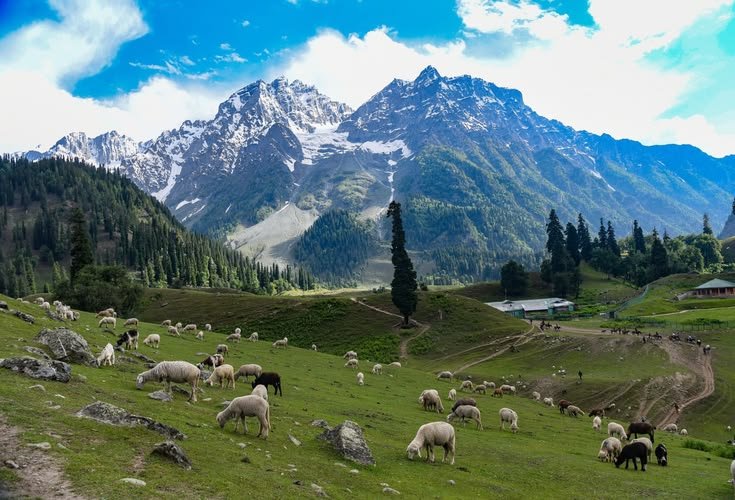
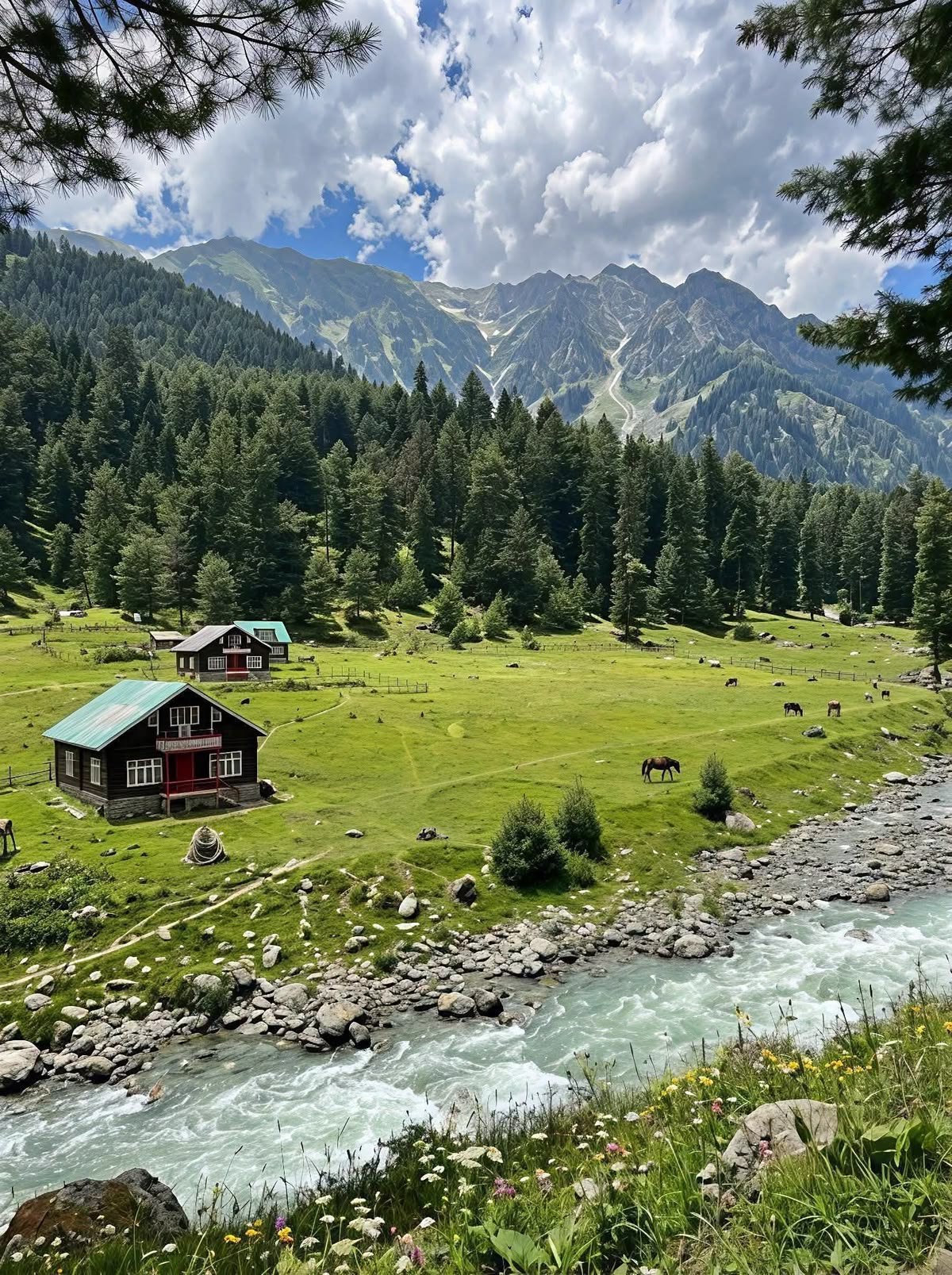
For many pilgrims, reaching Amarnath is not simply about visiting a temple. The journey itself is an important part of the experience. The route takes you through dramatic Himalayan landscapes, valleys, streams and high-altitude mountain trails before reaching the holy cave.
The pilgrimage traditionally begins from Pahalgam or Baltal, depending on the selected route. The Pahalgam route is longer and passes through beautiful mountain scenery, while the Baltal route is shorter but considerably steeper.
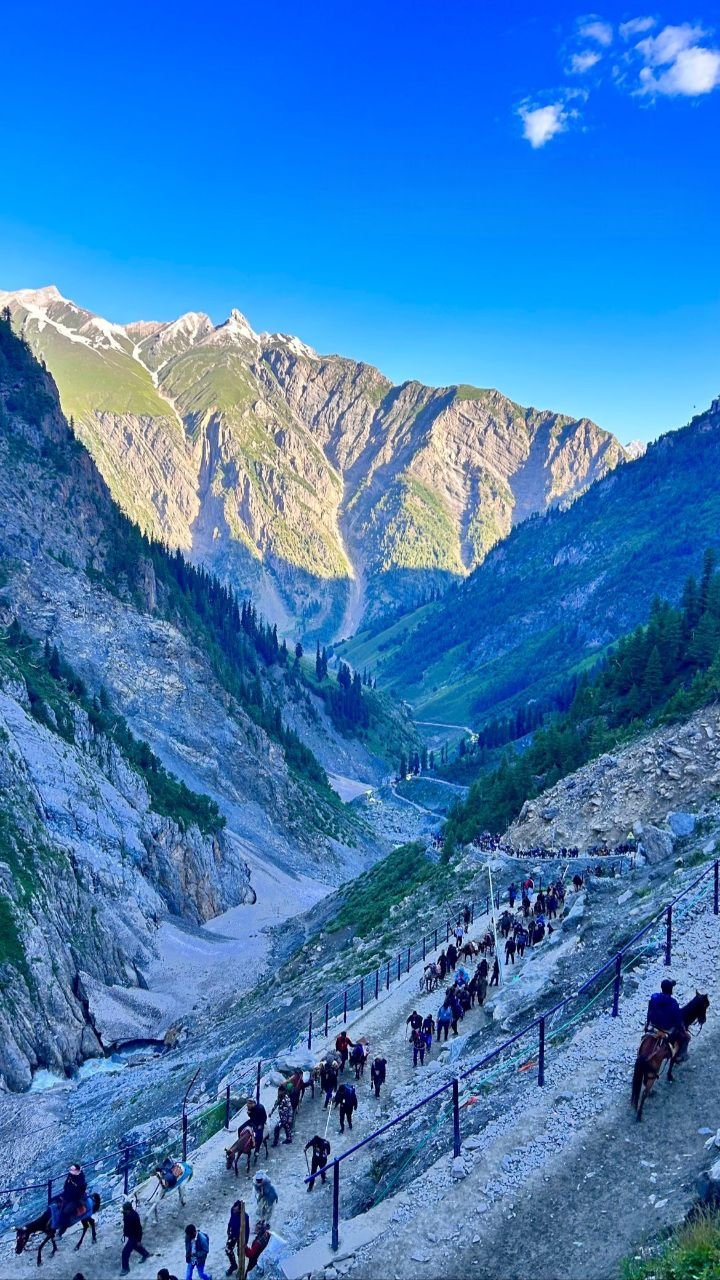
The atmosphere changes completely as you get closer to the cave. Groups of pilgrims walk together chanting “Har Har Mahadev”, while the surrounding mountains create a powerful sense of spirituality and adventure.
Why Visit Amarnath?
Amarnath is closely associated with one of the most famous stories of Lord Shiva.
According to Hindu tradition, Lord Shiva chose the secluded Amarnath Cave to reveal the secret of immortality to Goddess Parvati. To ensure that nobody else could hear the story, Shiva is believed to have left behind everything that could reveal their presence before entering the cave.
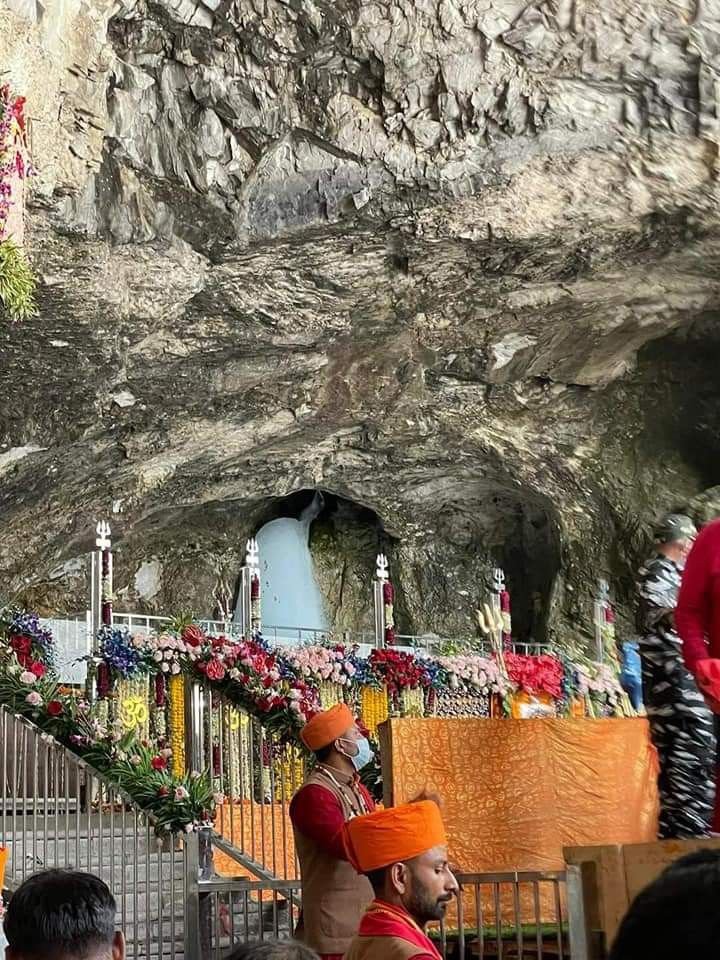
The naturally occurring ice formation inside the cave is traditionally worshipped as the Shivling.
The combination of mythology, devotion and the dramatic Himalayan setting makes Amarnath one of India’s most significant pilgrimage experiences.
The Holy Amarnath Cave
The Amarnath Cave is located high in the Himalayas and is the main destination of the pilgrimage. Inside the cave, a naturally formed ice formation is traditionally worshipped as Lord Shiva.
The appearance and size of the ice formation can vary depending on natural conditions and the season. For devotees, darshan at the cave is the spiritual highlight of the entire journey.
Because the pilgrimage is organised under specific government and shrine-board arrangements, travellers should always follow the latest registration, route, security and health requirements before starting the journey.
Amarnath Yatra Routes
There are two main traditional approaches to the Amarnath Cave.
Pahalgam Route
The Pahalgam route is the longer traditional route. The journey generally passes through places such as Pahalgam, Chandanwari, Pissu Top, Sheshnag and Panchtarni before reaching the Amarnath Cave.
Although longer, the route offers spectacular Himalayan scenery and allows pilgrims to experience the journey over multiple days.
For travellers who want to experience the pilgrimage as a trek rather than simply reaching the cave quickly, this route can be particularly rewarding.
Baltal Route
The Baltal route is considerably shorter than the Pahalgam route.
However, the shorter distance does not mean that it is easy. The trail contains steep sections and can be physically demanding.
Many pilgrims prefer this route when they have limited time. The exact route arrangements and facilities can vary from year to year.
Baltal Route Itinerary
Travellers choosing the Baltal route can generally complete the pilgrimage in a shorter period. The journey typically involves reaching Baltal, trekking towards the Holy Cave, completing darshan and returning towards Baltal.
A practical plan may include an additional day in Srinagar for arrival and departure.
The Baltal route is shorter but has steep sections, so travellers should not underestimate the physical effort involved.
Best Time for Amarnath Yatra
The Amarnath pilgrimage is held during a limited period each year, generally during the summer months, with exact dates determined annually by the Shri Amarnathji Shrine Board.
The pilgrimage takes place at high altitude, where weather can change rapidly.
It is essential to check the official pilgrimage dates, registration requirements, route status and weather conditions before travelling.
Amarnath Yatra Difficulty
The Amarnath Yatra should be considered a moderate to challenging high-altitude pilgrimage.
- The difficulty depends on the route you choose.
- The Pahalgam route involves a longer journey and several days of trekking.
- The Baltal route is shorter but steeper.
- High altitude, cold temperatures, uneven trails and rapidly changing weather can make the journey challenging even for physically fit travellers.
- Good preparation is therefore important.
How to Reach Amarnath
By Air
The nearest major airport for most travellers is Srinagar International Airport. From Srinagar, travellers can continue by road towards Pahalgam or Baltal according to their chosen route.
By Train
Rail connectivity is available to Jammu and to parts of the Kashmir Valley. Travellers can continue towards Srinagar and then travel by road to the pilgrimage route.
By Road
Srinagar is connected by road with Jammu and other parts of North India.
From Srinagar, transportation can be arranged towards Pahalgam or Baltal depending on the selected pilgrimage route.
Amarnath Yatra Difficulty and Fitness
Because the Amarnath Cave is located at high altitude, physical preparation is important. Start preparing with regular walking, stairs and cardiovascular exercise several weeks before the journey.
During the pilgrimage, maintain a comfortable pace rather than trying to walk too quickly. Stay hydrated and take adequate rest.
If you experience symptoms of altitude sickness or feel seriously unwell, inform the medical or pilgrimage support staff immediately.
What to Carry for Amarnath Yatra
- Comfortable trekking shoes with good grip
- Warm thermal clothing
- Waterproof jacket
- Woollen socks
- Gloves
- Warm cap
- Sunglasses
- Sunscreen
- Personal medicines
- Basic first-aid supplies
- Water bottle
- Small backpack
- Power bank
- Valid ID and required pilgrimage documents
- Waterproof bags for electronic items
- Walking stick if required
Avoid carrying unnecessary luggage during the trek.
Amarnath Yatra Travel Tips
- Register for the pilgrimage through the current official process before travelling.
- Carry the required health certificate and other documents if they are part of the year’s registration requirements.
- Do not treat the trek like a normal mountain walk. The high altitude can affect even physically fit travellers.
- Start early whenever the official route schedule permits.
- Keep your clothing layered because temperatures can change quickly.
- Avoid littering and respect the fragile Himalayan environment.
- Follow instructions from the shrine board, security personnel, medical teams and local authorities.
- If you are travelling with elderly family members, plan the route and pace carefully.
Final Thoughts
The Amarnath Yatra is a journey where devotion and the Himalayas come together. The long mountain trails, cold winds, dramatic valleys and chants of Har Har Mahadev create an atmosphere that is difficult to experience anywhere else. Reaching the Holy Cave after travelling through the mountains can be an emotional moment for devotees.
But the real beauty of Amarnath lies not only in the destination. It is in every step taken along the route, every mountain view, every moment of prayer and every fellow pilgrim sharing the same journey. Amarnath is a pilgrimage that asks for patience, preparation and faith. And for those who undertake it, the experience can remain in their hearts long after they have returned from the mountains.
Har Har Mahadev.
Highlights
- Darshan of the sacred Amarnath Cave
- Seek blessings of the naturally formed ice Shivling
- Experience the spiritual atmosphere of the Amarnath pilgrimage
- Trek through the beautiful Himalayan landscapes of Kashmir
- Choose between the Pahalgam and Baltal routes, subject to current arrangements
- Witness spectacular mountain valleys, streams and high-altitude scenery
- Experience the unique atmosphere of the annual Amarnath pilgrimage
- Explore the spiritual and natural beauty of Jammu and Kashmir